USA
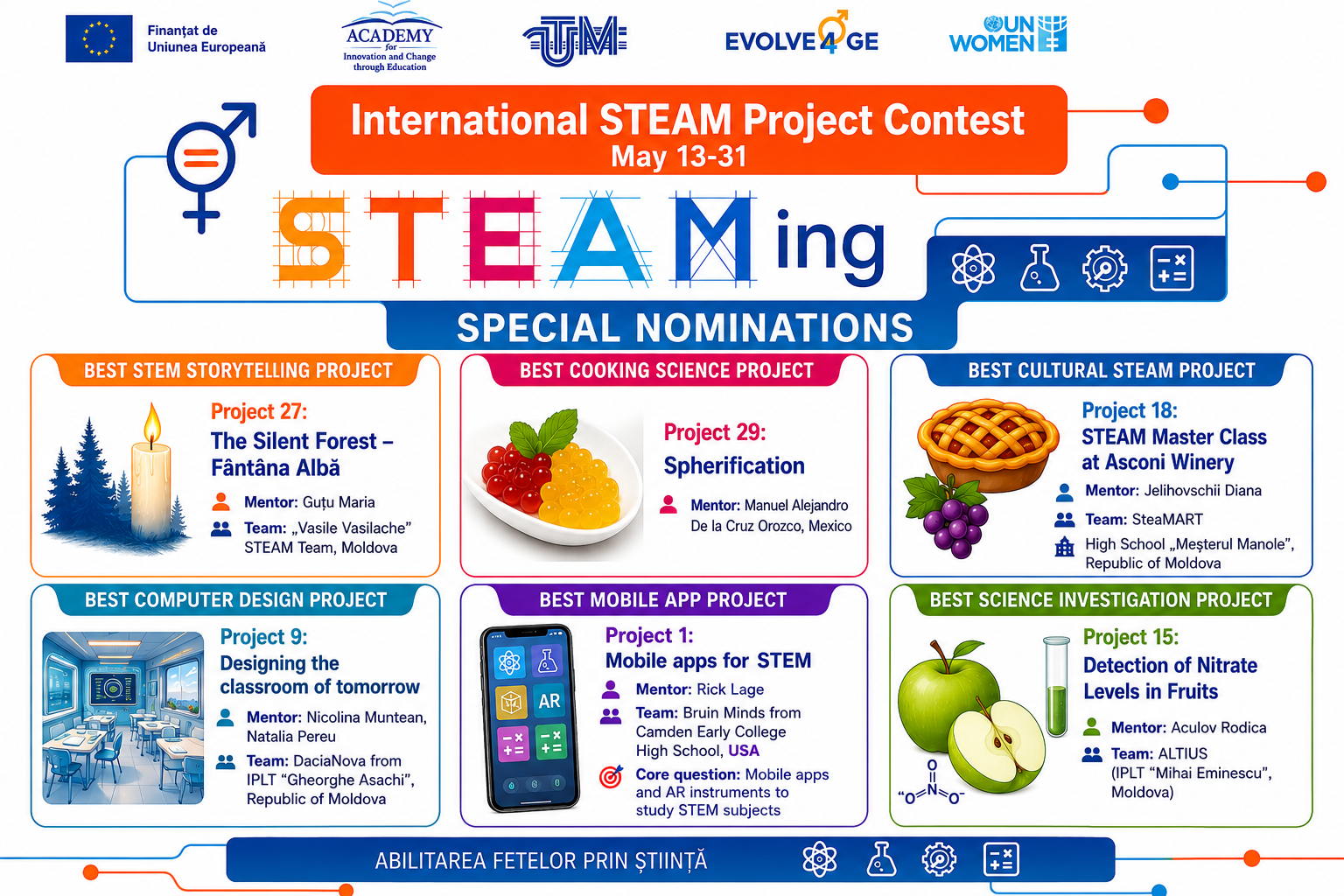
🧊 Project 1: Mobile apps for STEM
-
👩🏫Mentor: Rick Lage
-
🏫Team: Bruin Minds from Camden Early College High School
-
🎯Core question: Mobile apps and AR instruments to study STEM subjects
-
🧪Methodology: American students from Bruin Minds explored mobile app design by creating apps connected to their interests and projects. One group made a mobile app poster to complement their AR solar system experience, providing a handy reference for users. Another group designed an app to track rowing data on the water, connecting coding skills to a personal hobby and sharing their passion with teammates. These projects helped students practice planning, designing, and thinking about real-world app applications.
-
🔗Project link: https://drive.google.com/file/d/1vF0zT9R61ByoOt2E5rsMjtb1-twfkY-Q/view
Botswana
🧊 Project 2: A fun mobile app to present a student STEM team
-
👩🏫Mentor: Mpho Petros
-
🏫Team: Horizon from Gaborone Senior Secondary school
-
🎯Core question: How to design a mobile app to present a student STEAM team?
-
🧪Methodology: Melinda Kaffirma from Team Horizon presented their prototype app called „Horizon Quest”. This app is designed to keep you connected with our team, featuring a calendar for due dates, a sign-up page to join our team, visual meetings for discussions, a message collector for communication, and a section showcasing our products. I encourage you to explore the app and see how it can enhance your experience with Team Horizon and STEM.
-
🔗Project link: https://www.loom.com/share/4cc6cd2c06d04e68ab1fe694651bd59d
🧊 Project 3: Animation for Earth Preservation
-
Mentor: Arthur Matshameko
-
Team: from Bonnington Junior Secondary School
-
Core Question: How can digital designs develop students’ civic engagement skills?
-
🎯 Objective: To design an animation that will raise awareness about the environmental problems.
-
🧪 Methodology: We made an interactive animation using Scratch as a way to sensitize students to conserve the Environment. The project is about Afforestation. It’s one of the completed projects, and others will follow. The idea is to see media that our peers enjoy very much to spread the message of environmental conservation.
-
🔗 Project Link: https://padlet.com/academiaaise/team-k-smhkd0samiy925fz/wish/E1P8aX7Lp1o5WwA9
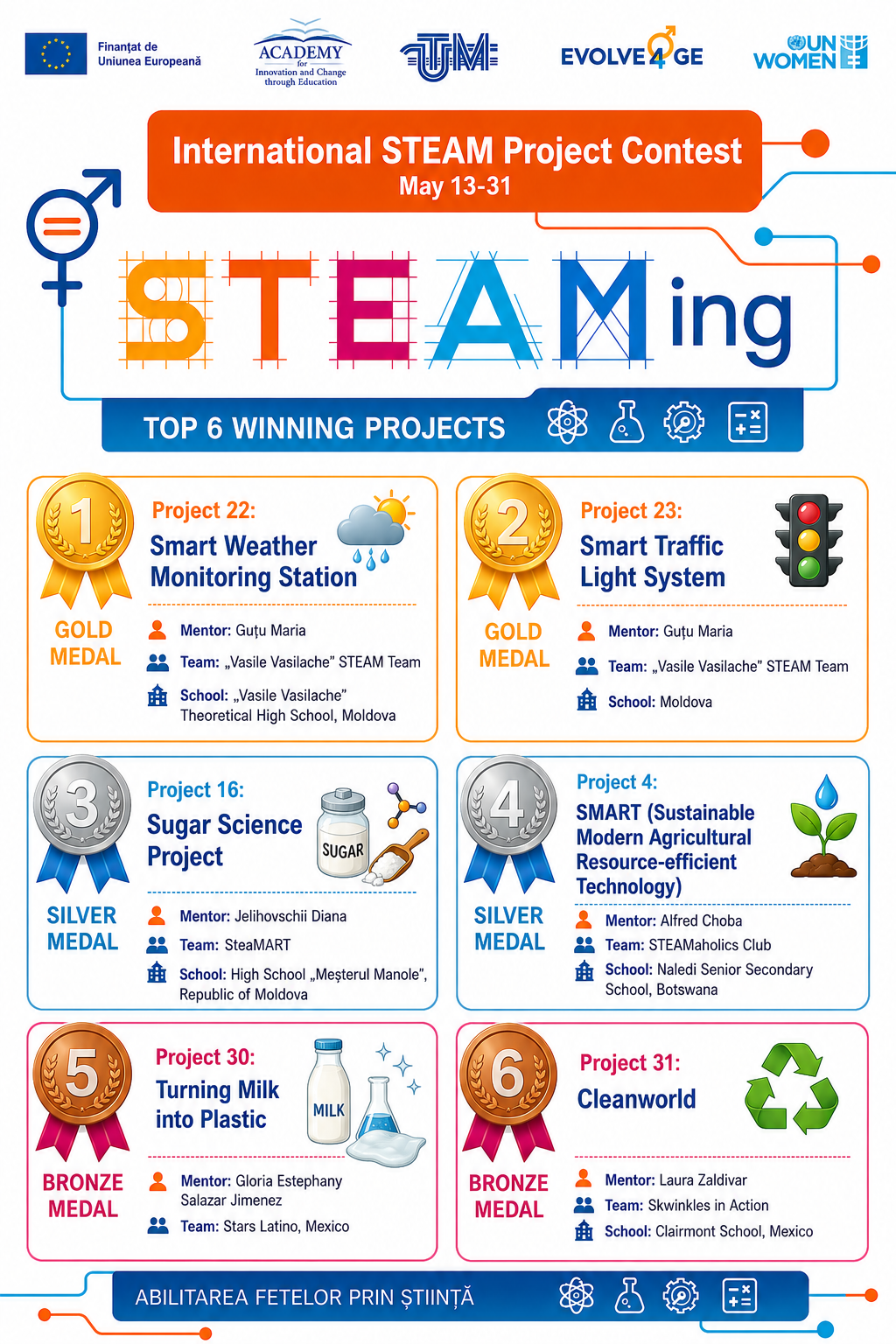
☀️Project 4: SMART (Sustainable Modern Agricultural Resource-efficient Technology)
👩🏫 Mentor: Alfred Choba
👥 Team: STEAMaholics Club
🏫 Naledi Senior Secondary School, Botswana❓ Core Question:
How can renewable energy improve agriculture in Botswana?🎯 Objective:
To create a sustainable hydroponic agricultural system powered by solar energy.🛠 Implementation:
1️⃣ Brainstorming and feasibility study.
2️⃣ Agricultural research.
3️⃣ Sketches and digital models.
4️⃣ DIY model construction.
5️⃣ Coding integration.
6️⃣ Video storytelling.🔗 Project Link:
https://drive.google.com/file/d/1QBtixSX9CG4aoT66Qsq2uPagdwjWG3LY/view?usp=sharing
-
India
🧊 Project 5: Sugar crystals in action
-
👩🏫Mentor: Safia Hina
-
🏫Team: Hyderabad Public School, Begumpet
-
🎯Core question: How much sugar is actually in foods and drinks you eat or drink?
-
🧪Methodology: Students chose popular beverages and searched their nutrition labels to calculate the total grams of sugar contained in each bottle or can. Next, they used precision digital scales to weigh out the exact amount of physical sugar crystals corresponding to each drink’s total. Finally, they displayed the sugar piles side-by-side with the bottles to visually expose and compare the hidden sugar content across different brands.
-
🔗Project link: https://padlet.com/STEAMingAcrossBorders/team-a-moldova-nigeria-romania-liberia-india-x3yqaqlxw9upiye8/wish/v3w8ZwGEyM4gZN52
Romania
🌿Project 6: Invasive Plants in Bucharest
👩🏫 Mentor: Popa Monica-Viorica
👥 Team: GREEN TEAM
🏫 Romania
❓ Core Question:
How do invasive plants affect biodiversity?
🎯 Objective:
To identify invasive species and study their environmental impact.
🛠 Implementation:
1️⃣ Identification of invasive plants.
2️⃣ Biological description.
3️⃣ Spread analysis.
4️⃣ Environmental impact evaluation.
5️⃣ Awareness activities.
🔗 Project Link: https://www.slideshare.net/slideshow/invasive-plant-species-in-bucharest-urban-botanical-field-study-2024/287878250
Armenia
🧊 Project 7: DIY baking soda and vinegar rocket
-
👩🏫Mentor: Kristine Apitsaryan
-
🏫Team: N 2 Primary School from Spitak
-
Core Question: How does changing the ratio of baking soda to vinegar affect the maximum height a DIY rocket can reach?
-
🎯 Objective: To investigate how different materials influence the melting speed of ice and understand thermal conductivity/insulation through a simple experiment.
-
🧪 Methodology: First, the students built a simple launch stand out of pencils taped to a plastic bottle and filled it with vinegar. Next, they wrapped baking soda in a tissue paper fuse, dropped it inside, quickly sealed the bottle with a cork, and flipped it over. Finally, they stepped back to watch the gas pressure launch the rocket and measured its height to see how changing the fuel amounts affected its flight.
-
🔗 Project Link: https://padlet.com/STEAMingAcrossBorders/team-b-moldova-mexico-bhutan-libera-9wrv5pp5vg3xxtua/wish/zV61Q6x9bA7GWO98
🥛 Project 8: The Science of Food – Milk Plastic
👩🏫 Mentor: Susanna Hovhannisyan
👥 Team: Creative Learners
🏫 School: Vanadzor High School N13, Armenia
❓ Core Question:
Can milk be transformed into plastic through chemistry?
🎯 Objective:
To explore chemical reactions and food science through hands-on experimentation.
🛠 Implementation:
1️⃣ Students discussed food science.
2️⃣ Materials were prepared (milk, vinegar, etc.).
3️⃣ Milk was heated and mixed with vinegar.
4️⃣ Chemical separation was observed.
5️⃣ Students shaped milk plastic.
6️⃣ The experiment was repeated until successful.
🔗 Links:
- https://www.facebook.com/share/v/1DD3Tje18j/?mibextid=wwXIfr
https://padlet.com/STEAMingAcrossBorders/team-d-yxwokzf72mldz4hn/wish/zV61Q6XG7NXRWO98
Republic of Moldova
🧊 Project 9: Designing the classroom of tomorrow
-
👩🏫Mentor: Nicolina Muntean, Natalia Pereu
-
Team: DaciaNova from🏫IPLT “Gheorghe Asachi”, Chisinau
-
Core Question: How can mobile apps be used to redesign school spaces?
-
🧪 Methodology: We have reinvented our English classroom, so now it is innovative, functional and student-centered. Thanks to this module, we have brought together creativity, technology and real-world skills.
-
🔗 Project Link: https://padlet.com/academiaaise/team-k-smhkd0samiy925fz/wish/R7dXadNbklNnZ6bl
🧊 Project 10: The Melting Race
-
👩🏫Mentor: Rodica Capița
-
Team: STEAMstormers from 🏫 LTPA “Elena Alistar”
-
Core Question: Which materials conduct heat faster and which act as insulators?
-
🎯 Objective: To investigate how different materials influence the melting speed of ice and understand thermal conductivity/insulation through a simple experiment.
-
🧪 Methodology: Students prepared surfaces from different materials (metal/aluminum, wood, plastic, fabric/sponge) and placed equal-sized ice cubes on them. They tracked melting times, recorded tactile temperature sensations, analyzed the results using comparison tables, and presented visual conclusions.
-
🔗 Project Link: Google Drive Video/File
🧼Project 11: Natural Soap for a Prosperous Future
-
👩🏫Mentor: Rodica Capița
-
🏫Team: STEAMstormers
-
Core Question: Investigating chemical reactions between different substances.
-
🎯 Objective: To help students understand observable chemical changes (color transformation, gas formation, temperature variation, or precipitate creation) through hands-on laboratory activities.
-
🧪 Methodology: After preparing lab materials and safety equipment, students measured and mixed different chemical substances. They carefully observed, recorded visible changes, discussed the scientific explanations behind the reactions, and created an educational video.
-
🔗 Project Link: Google Drive Video/File
🍃Project 12: “The Air We Breathe”
-
👩🏫Mentor: Ana Boldișor
-
🏫Team: Alistar’s Champions
-
Core Question: Air in the city vs. air in the village.
-
🎯 Objective: To compare and evaluate the quality of the air we breathe in urban versus rural environments.
-
🧪 Methodology: Students researched air pollution examples, then hung two sheets of oiled paper on trees—one on a busy city street and one in a village. After a couple of days, they retrieved the sheets, observed that the city paper was noticeably dirtier, formulated conclusions, and produced a video documenting the experiment.
-
🔗 Project Link: Google Drive Video/File
💧 Project 13: Water, Air & Soil Research
-
👩🏫Mentor: Aculov Rodica
-
Team: ALTIUS🏫 IPLT “Mihai Eminescu”
-
Core Question: How can we create a simple water filter to clean dirty water using everyday materials?
-
🎯 Objective: To understand the importance of clean water and water purification while developing critical thinking, creativity, and teamwork by designing a simple water filtration system.
-
🧪 Methodology: Teams discussed water pollution and the mechanics of filtration. They gathered plastic bottles and layers of materials (sand, gravel, charcoal, cotton). After constructing the filters, they poured dirty water through them, compared the pre- and post-filtered water, analyzed which layers worked best, and presented their scientific reflections.
-
🔗 Project Link: Google Drive Video/File
🎨 Project 14: A Modern School
-
👩🏫Mentor: Aculov Rodica
-
🏫Team: ALTIUS (IPLT “Mihai Eminescu”, Cimișlia, Moldova)
-
❓ Core Question: How can architectural design, vivid colors, and creative renovation transform a standard school into an ideal, highly motivating, and student-friendly space?
-
🎯 Objective: To conceptualize and showcase a vision of a “perfect school” through watercolor painting, highlighting the psychological impact of design and color on an attractive learning environment.
-
🧪 Methodology: * Preparation: The student assembled the necessary video filming gear, initial structural sketches, and art supplies.
-
Creation & Narration: The student painted an altered, highly vibrant version of the school building, exceeding its real-world color palette.
-
Reflective Presentation: Throughout the painting process, the student spoke directly to the camera, explaining their artistic choices, design philosophy, and vision for the ultimate educational environment.
-
-
🔗 Project Link: YouTube Video – O scoala ideala
🍏 Project 15: Detection of Nitrate Levels in Fruits
-
👩🏫Mentor: Aculov Rodica
-
🏫Team: ALTIUS (IPLT “Mihai Eminescu”, Cimișlia, Moldova)
-
❓ Core Question: How can we scientifically detect nitrate contamination levels in both home-cultivated and store-bought fruits and vegetables to ensure they are safe for consumption?
-
🎯 Objective: To execute practical laboratory testing that distinguishes between safe, edible produce and potentially harmful chemical levels in daily food items.
-
🧪 Methodology: * Role Assignment: The project was organized systematically into an active laboratory crew consisting of an editor (Josu Neli), a cameraman (Popovici Anastasia), and active research participants (Railean Veronica, Nica Andreea, Șestovschi Octavian).
-
Testing Process: The team prepared various samples of store-bought and homegrown fruits and vegetables. They used testing equipment to detect hidden nitrate concentrations.
-
Evaluation: The visual results were analyzed to assess food safety thresholds, and the entire chemical testing procedure was compiled into an instructional video.
-
-
🔗 Project Link: Google Drive Video/File
🍭 Project 16: Sugar Science Project
👩🏫 Mentor: Jelihovschii Diana
👥 Team: SteaMART
🏫 High School „Meșterul Manole”, Sălcuța, Căușeni, Republic of Moldova❓ Core Question: How does the sugar content in beverages affect health, and how can scientific investigation help students make healthier choices?
🎯 Objective: To develop students’ scientific thinking and healthy lifestyle awareness by investigating and comparing the sugar content in regular and sugar-free drinks through experiments, data collection, and digital analysis.
🧪 Methodology:
🔹 Research on healthy nutrition and sugar consumption
🔹 Hypothesis development and comparison of beverages
🔹 Label analysis and sugar measurement experiments
🔹 Data collection using tables and charts
🔹 Team presentations and scientific discussions
🔹 Reflection on healthier lifestyle choices🌟 Results & Impact:
Students improved their critical thinking, research, teamwork, and presentation skills while gaining a deeper understanding of nutrition and hidden sugar in beverages.
🔗 Project Link:
https://drive.google.com/file/d/1v4jyd2x0wSuTXBbnPPzWCcD2gBDO4bhe/view?usp=sharing
Project 17: 🚠 ZipLine Madness
👩🏫 Mentor: Jelihovschii Diana
👥 Team: SteaMART
🏫 High School „Meșterul Manole”, Sălcuța, Căușeni, Republic of Moldova❓ Core Question: How can engineering design and physics principles improve the speed, balance, and efficiency of a zip-line gondola?
🎯 Objective: To develop students’ creativity, engineering, teamwork, and problem-solving skills through a STEAM challenge involving the design and testing of zip-line gondolas.
🧪 Methodology:
🔹 Introduction to gravity, motion, friction, and engineering concepts
🔹 Team brainstorming and sketching of gondola prototypes
🔹 Construction using various materials
🔹 Testing, redesign, and optimization
🔹 Competitive races and comparative analysis
🔹 Reflection on engineering solutions and physical forces🌟 Results & Impact:
Students transformed theoretical physics concepts into practical engineering applications while enhancing innovation, resilience, collaboration, and hands-on learning skills.
🔗 Project Link:
https://drive.google.com/file/d/1D0pkML4ANI84d5Pe2180sfQynWbiKR7b/view?usp=sharing
Project 18:🥧 STEAM Master Class at Asconi Winery
👩🏫 Mentor: Jelihovschii Diana
👥 Team: SteaMART 🏫 High School „Meșterul Manole”, Sălcuța, Căușeni, Republic of Moldova
❓ Core Question: How can culinary traditions become an interdisciplinary STEAM learning experience connecting science, culture, creativity, and practical life skills?
🎯 Objective: To develop students’ practical life skills, creativity, teamwork, and cultural awareness through a STEAM-based culinary master class focused on preparing traditional Moldovan pies.
🧪 Methodology:
🔹 Exploration of Moldovan culinary traditions and gastronomy
🔹 Professional demonstration of baking techniques
🔹 Team preparation of ingredients and dough
🔹 Observation of cooking processes and temperature changes
🔹 Creative pie design and presentation
🔹 Reflection on the relationship between science, culture, and culinary arts🌟 Results & Impact:
Students gained practical cooking skills, improved collaboration and creativity, and explored how science and culture intersect in everyday life through experiential learning.
🔗 Project Link:
https://youtu.be/PiYB1yyt5H0?si=LyfQ9WCYAysM5RHV
Project 19:🍲 Crumble of our Heaven – Cooking Calendar
👩🏫 Mentor: Bîzgu Elena
👥 Team: Wired for Innovation
🏫 IPLT „Ștefan cel Mare”, Republic of Moldova❓ Core Question: How can augmented reality transform traditional cooking into an immersive and interactive STEAM learning experience?
🎯 Objective: To promote traditional Moldovan cuisine and cultural heritage through augmented reality technology while developing creativity, digital literacy, and STEAM competencies.
🧪 Methodology:
🔹 Research of traditional recipes and cultural history
🔹 Writing step-by-step cooking instructions
🔹 Filming and editing cooking tutorial videos
🔹 Integration of digital content into the Halo AR application
🔹 Creation of an interactive augmented reality recipe calendar
🔹 Collaborative teamwork and digital storytelling🌟 Results & Impact:
Students successfully combined gastronomy, culture, technology, and augmented reality to create an innovative educational product that made learning interactive, engaging, and accessible. The project strengthened digital, creative, and communication skills while promoting Moldovan culinary traditions internationally.
🔗 Project Links:📌 Padlet:
https://padlet.com/STEAMingAcrossBorders/team-i-and-team-j-7lrttjs69tygdzeb/wish/zV61Q6XBmdrPWO98🎥 Video: https://youtu.be/JO4Eug8Hcjs
https://www.facebook.com/100007810357538/videos/828491383279374/ -
Project 20: 💧 The Quality of Water
👩🏫 Mentor: Jelihovschii Diana
👥 Team: SteaMART
🏫 School: High School „Meșterul Manole”, Sălcuța, Căușeni, Moldova
❓ Core Question:
How can we investigate and evaluate the quality of water in our local community?
🎯 Objective:
To develop students’ scientific investigation and environmental awareness skills through water testing and analysis.
🛠 Step-by-Step Implementation:
1️⃣ Students learned about water quality and pH levels.
2️⃣ Teams collected water samples from different locations.
3️⃣ Water was tested using pH indicator strips.
4️⃣ Students recorded and analyzed the results.
5️⃣ Teams presented conclusions and environmental observations.
6️⃣ Reflection activities focused on water safety and sustainability.
🔗 Project Link:
https://drive.google.com/file/d/1cUa7PDxtwahfE7XHLLnfo8ZqdEesdZ89/view?usp=sharing
Project 21:🤝 From Fear to Friendship
👩🏫 Mentor: Diana Jelihovschii
👥 Team: SteaMART
🏫 School: High School „Meșterul Manole”, Moldova
❓ Core Question:
How can digital storytelling help students understand bullying and empathy?
🎯 Objective:
To develop empathy, creativity, communication, and video production skills through anti-bullying storytelling.
🛠 Implementation:
1️⃣ Discussion about bullying and emotions.
2️⃣ Students wrote a screenplay.
3️⃣ Roles were distributed (actors, editors, camera crew).
4️⃣ Scenes were filmed in school settings.
5️⃣ Video editing and sound integration.
6️⃣ Final reflection about kindness and inclusion.
🔗 Project Link:
https://drive.google.com/file/d/11JplosVnbHWZKxIafLadH-_A9mTMfMU_/view?usp=sharing
Project 22: 🌦 Smart Weather Monitoring Station
👩🏫 Mentor: Guțu Maria
👥 Team: „Vasile Vasilache” STEAM Team
🏫 School: „Vasile Vasilache” Theoretical High School, Moldova
❓ Core Question:
How can smart technologies monitor environmental conditions automatically?
🎯 Objective:
To develop an intelligent environmental monitoring system using sensors and programming.
🛠 Implementation:
1️⃣ Students planned the station.
2️⃣ Sensors and ESP32 components were selected.
3️⃣ Circuit simulation in Tinkercad.
4️⃣ Hardware assembly.
5️⃣ Programming the system.
6️⃣ Automatic responses (LEDs, buzzer, fan).
7️⃣ Testing and troubleshooting.
8️⃣ Final prototype presentation.
🔗 Project Link:
https://youtube.com/shorts/n5siSqMt2VI
Project 23:🚦 Smart Traffic Light System
👩🏫 Mentor: Guțu Maria
👥 Team: „Vasile Vasilache” STEAM Team
🏫 Moldova
❓ Core Question:
How can smart city technologies improve traffic safety?
🎯 Objective:
To design and program an automated traffic light and pedestrian crossing system.
🛠 Implementation:
1️⃣ Research on real traffic systems.
2️⃣ Component selection.
3️⃣ Circuit design in Wokwi.
4️⃣ Programming traffic sequences.
5️⃣ Pedestrian crossing integration.
6️⃣ OLED countdown and sound alerts.
7️⃣ Final prototype demonstration.
🔗 Project Link:
https://youtu.be/RiuBd7I_k0U
Project 24:🌱 Smart Greenhouse System
👩🏫 Mentor: Guțu Maria
👥 Team: „Vasile Vasilache” STEAM Team
🏫 Moldova
❓ Core Question:
How can smart agriculture technologies improve plant growth?
🎯 Objective:
To combine biology, soil science, and automation in a smart farming prototype.
🛠 Implementation:
1️⃣ Soil collection and pH analysis.
2️⃣ Wheat planting and monitoring.
3️⃣ Growth measurement and data collection.
4️⃣ Arduino irrigation system construction.
5️⃣ Programming automated watering.
6️⃣ Testing and optimization.
7️⃣ Final scientific presentation.
🔗 Links:
https://youtu.be/-yHBIrHIKbc
https://drive.google.com/file/d/1zCK9ShFbcj6wyLZeA2K7rtoHxAcoLOSB/view?usp=drive_link
Project 25: ❤️ STEAM Martisor Project
👩🏫 Mentor: Guțu Maria
👥 Team: „Vasile Vasilache” STEAM Team
❓ Core Question:
How can cultural traditions be combined with electronics and coding?
🎯 Objective:
To create an interactive technological Martisor prototype.
🛠 Implementation:
1️⃣ Exploring Martisor traditions.
2️⃣ Circuit simulation in Tinkercad.
3️⃣ Hardware assembly.
4️⃣ Programming LEDs and buzzer.
5️⃣ Music synchronization.
6️⃣ Artistic decoration.
7️⃣ Final testing and presentation.
🔗 Links:
https://youtu.be/XfQS4XWjbFw
https://drive.google.com/file/d/1-5fzp6Nog84ZnUCsmJDixa6pdpFonDI3/view?usp=sharing
Project 26: 🏫 Space2Learn – Virtual 3D School
👩🏫 Mentor: Guțu Maria
👥 Team: „Vasile Vasilache” STEAM Team
❓ Core Question:
What should the school of the future look like?
🎯 Objective:
To design a sustainable virtual learning environment using Roblox Studio.
🛠 Implementation:
1️⃣ Researching modern schools.
2️⃣ Team planning and sketching.
3️⃣ 3D modeling in Roblox Studio.
4️⃣ Adding smart technologies and green spaces.
5️⃣ Testing and redesign.
6️⃣ Final virtual presentation.
🔗 Links:
https://www.youtube.com/watch?v=Xq6596ChsZs
https://drive.google.com/file/d/1-H41OTxUqGxRr-cJ-YQGqDht_mqitNIL/view?usp=sharing
Project 27: 🕯 The Silent Forest – Fântâna Albă
👩🏫 Mentor: Guțu Maria
👥 Team: „Vasile Vasilache” STEAM Team
❓ Core Question:
How can digital storytelling preserve historical memory?
🎯 Objective:
To create a multimedia educational story about the Fântâna Albă Massacre.
🛠 Implementation:
1️⃣ Historical research.
2️⃣ Screenplay writing.
3️⃣ Scene planning and filming.
4️⃣ Sound and visual editing.
5️⃣ Multimedia production.
6️⃣ Reflection on history and human rights.
🔗 Project Link:
https://youtu.be/aITxww67SC8
Project 28:🦊 Fluent Fox Learning App
👩🏫 Mentor: Nicolina Muntean
👥 Team: DaciaNova
🏫 „Gheorghe Asachi” High School, Moldova
❓ Core Question:
How can mobile apps make English learning more engaging?
🎯 Objective:
To develop a game-based educational English learning application.
🛠 Implementation:
1️⃣ Brainstorming learning challenges.
2️⃣ Researching educational apps.
3️⃣ Designing the app concept.
4️⃣ Creating educational tasks and games.
5️⃣ Prototype development.
6️⃣ Testing and improvement.
7️⃣ International presentation.
🔗 Project Link:
https://padlet.com/academiaaise/team-k-smhkd0samiy925fz/wish/goElQyOXlR8nW3yY
Mexico
🧪 Project 29: Spherification
-
Mentor: Manuel Alejandro De la Cruz Orozco
-
Team: STEAMERS from🏫 Colegio Latino
-
Core Question: Exploring and experimenting with how yogurt transforms into spheres.
-
🎯 Objective: To explore how food science connects to STEAM by applying the scientific method to advanced culinary techniques.
-
🧪 Methodology: Students reviewed the theory of spherification. During experimentation, they dropped a spoonful of yogurt into a sodium alginate solution, rinsed the resulting spheres in purified water to remove excess alginate, and conducted observation and analysis throughout the cycle.
-
🔗 Project Link: Padlet Wish
🥛 Project 30: Turning Milk into Plastic
-
Mentor: Gloria Estephany Salazar Jimenez
-
Team: Stars Latino
-
Core Question: Experimentation on how different amounts of vinegar interact with milk.
-
🎯 Objective: To engage students in practical scientific methodology and hypothesis testing by analyzing a chemical interaction between everyday ingredients.
-
🧪 Methodology: Cups were labeled based on different teaspoon measurements of vinegar. Milk was heated and poured into each cup simultaneously. Students noted down their immediate observations, then filtered the substances to track and analyze structural changes.
-
🔗 Project Link: Padlet Wish
Project 31:♻️ Cleanworld
👩🏫 Mentor: Laura Zaldivar
👥 Team: Skwinkles in Action
🏫 Clairmont School, Mexico❓ Core Question:
How can robots help solve trash pollution?🎯 Objective:
To make recycling more effective and fun through robotics.🛠 Implementation:
1️⃣ Identifying pollution problems.
2️⃣ Brainstorming robotic solutions.
3️⃣ Building two robots.
4️⃣ Programming collection and sorting systems.
5️⃣ Creating a demonstration scenario.🔗 Project Link:
https://drive.google.com/drive/folders/1XOcYUZV_rlg55XxN94gqdCODmm2-lZeJ
Project 32:♻️ Pencil Strike
- Mentor: Magdalena Grigore
- Student team name: Photon Innovators
- Institution: Colegiul Național „Alexandru Ioan Cuza”, Romania
- Project name: Pencil Strike
- Project description: In this STEAM project, students explored the science and engineering principles behind trebuchets. They began by researching trebuchets and learning about potential energy, gravity, and projectile motion, while comparing trebuchets with other types of catapults. Students then designed their own simple model, planned the structure, and gathered materials such as pencils, rubber bands, string, and small containers for projectiles. Using these materials, they built a stable frame, constructed a rotating throwing arm, and added a counterweight and sling mechanism. After completing the model, students tested their trebuchets by launching lightweight objects and observing the projectile distance and trajectory. They measured and recorded the results, analyzed the data, and improved their designs by modifying elements such as arm length, counterweight, and launch angle. Through this hands-on activity, students developed skills in science, technology, engineering, arts, and mathematics, as well as teamwork, problem-solving, and critical thinking.
- Project link: https://canva.link/aaj5zp2ats6129k and https://canva.link/6zwkb100cq5cfv5